Saju: Korean Four Pillars astrology samjhaaya gaya
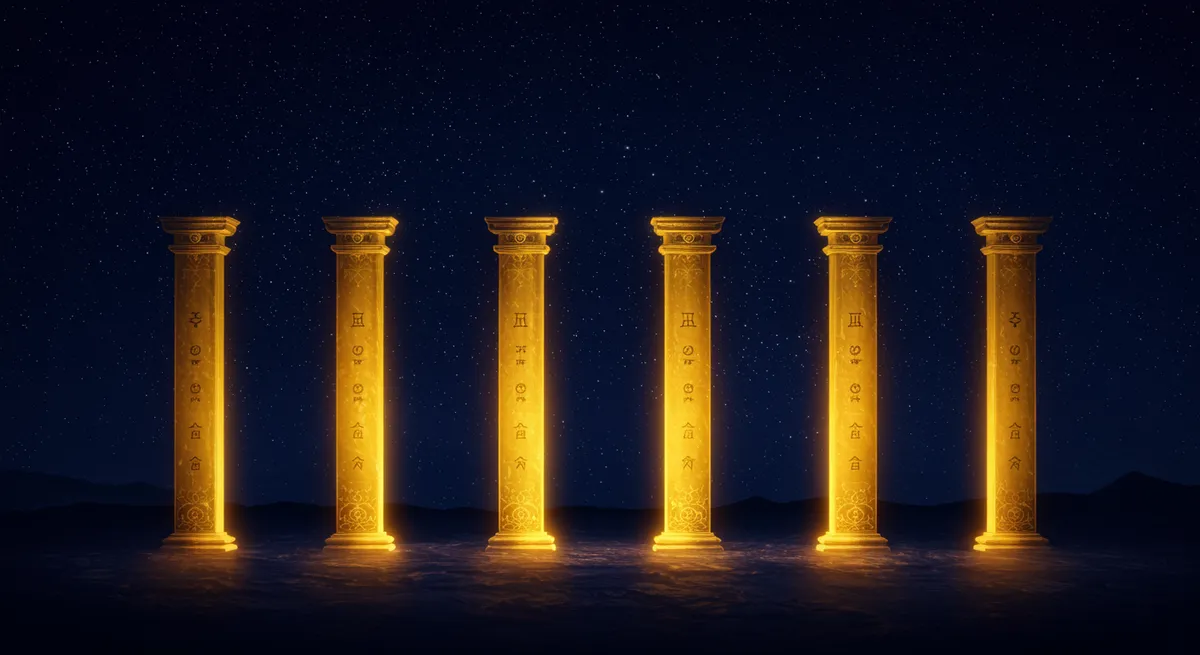
Saju (사주) Four Pillars astrology ki Korean tradition hai, Chinese BaZi system se closely related aur usi East Asian calendar ke stems aur branches par bani. Naam ka matlab 'chaar pillars' hai, aur ye bilkul wahi hai jo ye hai: aapka janm saal, mahina, din, aur ghanta, har ek symbols ke ek pair ke roop mein express. Saath mein woh chaar pairs us pal ke liye ek tarah ka cosmic ID banate hain jab aap paida hue. Jahan Western astrology grahon ko zodiac ke against map karti hai, wahin Saju lagbhag poori tarah calendar aur paanch elements se kaam karta hai, ek alag sawaal poochta hua — 'graha kahan the?' nahi balki 'jab aap aaye toh samay mein elemental energy ka kaunsa mixture moujood tha?'. Yahan samjho ki ye kaise structured hai aur ek reading actually kaise draw hoti hai.
Chaar pillars
Har pillar samay ka ek slice aur, traditionally, life ki ek stage represent karta hai. Year pillar aapke early years, ancestry, aur broad social identity se associated hai. Month pillar aapke growing-up years, maa-baap, aur career environment se relate karta hai. Day pillar chart ka dil hai — ye aapko aur aapke closest rishton ke liye khada hai, especially aapke partner. Hour pillar later life, bachche, aur aapki inner ambitions cover karta hai. Pillars ko order mein padhna thoda ek life ko beginning se end tak padhne ki tarah hai, lekin woh sab ek saath bhi operate karte hain, ek doosre ke saath us tarah interact karte hue jaise ek chhat ke neeche family members interact karte hain.
Heavenly stems aur earthly branches
Har pillar do parts ka bana hai: upar ek heavenly stem aur neeche ek earthly branch. Das heavenly stems hain, jo paanch elements (Wood, Fire, Earth, Metal, Water) hain har ek ek yin aur ek yang form mein. Baarah earthly branches hain, jo baarah zodiac animals se correspond karte hain — Rat, Ox, Tiger, Rabbit, aur aage. Toh aapka hour pillar 'yang Fire Horse branch ke upar' ho sakta hai, aur aapka year pillar 'yin Metal Ox branch ke upar'. Chaar stems aur chaar branches kul aath symbols dete hain — jo ek vajah hai ki is system ke Chinese cousin ko BaZi, 'aath characters', kehte hain. Har branch ek ya zyada 'hidden stems' bhi chupke se contain karta hai, ek depth add karte hue jise ek skilled reader unpack karta hai.
Day master: ye 'aap' ho
Poore chart ka sabse important single symbol day pillar ka heavenly stem hai, jise day master (Korean mein ilgan) kehte hain. Ye ek element aapko represent karta hai — aapka core self. Chart ka baaki sab kuch iske relation mein padha jaata hai. Agar aapka day master yang Wood hai, for instance, toh aapko aksar ek lambe ped ki imagery se describe kiya jaata hai: upright, growth-oriented, steady, kabhi-kabhi inflexible. Baaki saat characters phir woh climate ban jaate hain jismein aapka ped grow kar raha hai: Kya bahut zyada Metal symbols hain, jo Wood ko 'cut' karte hain? Bahut Water, jo ise feed karta hai? Fire, jise produce karne mein use energy spend karni padti hai? Reading essentially is baat ki kahani hai ki aapka day master apne around ke elements ke beech kaise fares karta hai.
Paanch elements aur balance
Saju paanch elements aur unke do relationships jeeta aur saans leta hai: ek generating cycle (Wood Fire ko feed karta hai, Fire Earth banaata hai, Earth Metal ko bear karta hai, Metal Water ko carry karta hai, Water Wood ko grow karta hai) aur ek controlling cycle (Wood Earth ko todta hai, Earth Water ko block karta hai, Water Fire ko bujhaata hai, Fire Metal ko pighlaata hai, Metal Wood ko kaatta hai). Ek reader tally karta hai ki aath characters ke aar-paar har element ke kitne appear hote hain aur dekhta hai ki kya abundant hai, kya missing, aur kya day master strong (friendly elements se well-supported) hai ya weak (un elements se ghira jo drain ya control karte hain). Goal ek perfect five-way balance nahi hai — ye aapke chart ke particular shape ko samajhna hai aur kaunsa element ise behtar harmony mein laaega. Woh missing ya needed element ko aksar 'useful god' kehte hain, woh energy jise cultivate karne se aapko faayda hota hai.
Saju strengths aur life seasons kaise padhta hai
Do ideas Saju ko ek fixed label se kam aur weather ke ek forecast se zyada feel karaate hain. Pehle, aapki strengths interplay se aati hain: ek strong day master self-reliant aur resilient hone ki taraf jaata hai lekin apni energy ke liye outlets chahiye ho sakta hai, jabki ek weaker day master aksar support, collaboration, aur sahi environment par thrive karta hai. Doosra, aapka chart still nahi baithta — ye 'luck pillars' (대운, daeun), das-saal periods jo har ek apna khud ka stem aur branch laate hain, plus har guzarte saal ki energy se milta hai. Jab ek luck period woh element supply karta hai jo aapke chart mein missing tha, toh life ka woh stretch ek favourable season jaisa feel hota hai; jab ye ek element par dher laga deta hai jo aapke paas pehle se bahut zyada tha, toh ye current ke against swim karne jaisa feel ho sakta hai. Isi liye Saju ko aksar fate ke bajaaye seasons aur timing ke terms mein describe kiya jaata hai.
Ek worked example
Maan lo kisi ka day master yin Water hai, aur unke aath characters ke aar-paar Water aur Metal kai baar appear karte hain jabki Fire aur Earth lagbhag absent hain. Ek reader ise ek strong Water chart likely kahega — well-supported, fluid, intelligent, adaptable, lekin Fire (warmth, visibility, motivation) aur Earth (structure, grounding) ke bina cold, scattered, ya directionless feel karne ke risk par. Yahan 'useful' elements Fire aur Earth honge. Ab imagine karo ki ye insaan apni thirties mein Fire energy carry karta ek das-saal luck pillar mein enter karta hai. Saju us decade ko ek warming, clarifying season ke roop mein padhega — spotlight mein step karne, ek direction par commit karne, aur kuch solid banane ka ek achcha samay. Inmein se kuch bhi ek guarantee nahi hai; ye elemental climate ka ek description hai aur iske saath kaise kaam karna hai, plant karne se pehle season jaanne ki tarah.
Aksar pooche jaane waale sawaal
Saju Western zodiac astrology se kaise alag hai? Western astrology Surya, Chandra, aur grahon ki positions zodiac ke aar-paar par bani hai, jabki Saju calendar par bana hai — stems, branches, aur paanch elements — bina kisi grahon ke involved. Woh alag tools ke saath alag sawaal jawaab de rahe hain, toh ek Saju reading aur ek horoscope ek hi insaan ke liye bhi kaafi distinct feel ho sakte hain. Bahut log dono ko un alag angles ke liye compare karna enjoy karte hain jo woh offer karte hain.
Kya mujhe Saju ke liye apna exact janm samay chahiye? Hour pillar aapke janm samay par depend karta hai, toh uske bina aap chaar pillars mein se ek aur woh later-life aur inner-ambition layer kho dete ho jo ye provide karta hai. Aap abhi bhi saal, mahine, aur din se ek meaningful teen-pillar reading pa sakte ho, lekin full chart ke liye — aur ek accurate day master interaction ke liye — ek accurate janm samay bahut madad karta hai. Agar aapka time uncertain hai, toh hour pillar ke details ko tentative maano.
Kya ek 'weak' day master hona ek buri cheez hai? Bilkul nahi. Saju mein 'strong' aur 'weak' is baat ke technical descriptions hain ki aapka day master kitna supported hai, value judgements nahi. Ek weaker day master aksar collaboration, mentors, aur sahi environment ke through flourish karta hai, jabki ek strong independence ki taraf jaata hai. Har ek ke apne gifts hain aur apni cheezein dhyaan rakhne ko, aur useful element kisi bhi tarah rebalance karta hai.
Kya mera Saju chart badal sakta hai? Aapke aath birth characters fixed hain — woh us pal ka ek snapshot hain jab aap paida hue. Jo badalta hai woh unke around ka climate hai: das-saal luck pillars aur har saal ki energy continually aapke fixed chart ke saath interact karte hain, jo ek vajah hai ki life genuinely alag seasons mein alag feel hoti hai. LuckMap ke Saju section mein aap apne chaar pillars, apna day master, aur apna element balance laid out dekh sakte ho, phir pooch sakte ho ki aapka current season kya favour karta hai.