Pięć żywiołów (Wu Xing) w astrologii chińskiej
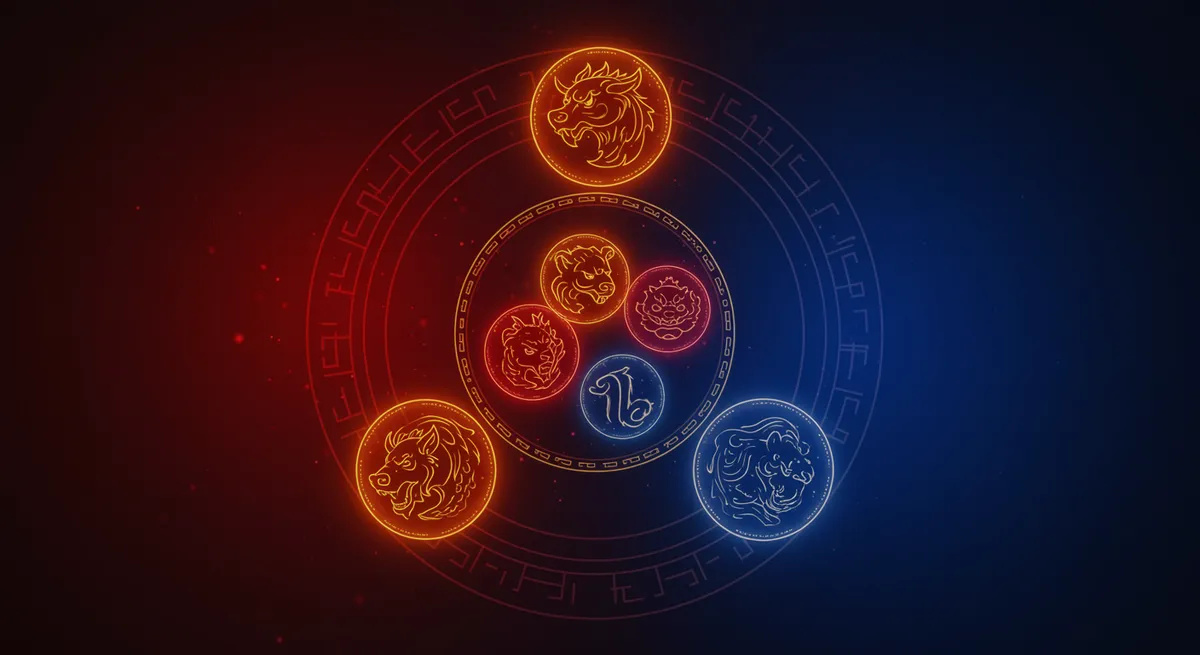
Większość ludzi poznaje astrologię chińską przez dwanaście zwierząt — Szczura, Bawołu, Tygrysa i tak dalej. Ale pod spodem jest druga warstwa, która wykonuje co najmniej tyle samo pracy: pięć żywiołów, po chińsku Wu Xing (dosłownie 'pięć faz' lub 'pięć ruchów'). Drewno, Ogień, Ziemia, Metal i Woda nie są pomyślane jako fizyczne materiały, lecz jako pięć smaków energii, pięć sposobów, w jakie rzeczy rosną, osiągają szczyt, osiadają i gasną. Połącz żywioł ze zwierzęciem, a dostaniesz znacznie bardziej precyzyjny portret niż samo zwierzę. Ten przewodnik przechodzi przez to, co reprezentuje każdy żywioł, jak żywioły się nawzajem karmią i powściągają oraz jak Twój żywioł urodzeniowy zabarwia temperament.
Co naprawdę znaczy 'pięć faz'
Pomaga na chwilę odłożyć słowo 'żywioł' i pomyśleć 'faza cyklu'. Drewno to energia wiosny i wschodu słońca — kiełkowanie, pchanie w górę, pełnia nowych planów. Ogień to pełnia lata i południe — szczyt ekspresji, ciepło, widoczność, moment, w którym coś jest w pełni żywe. Ziemia to późnoletnia pauza i środek — osiadanie, zbiory, ugruntowanie, utrzymywanie wszystkiego w równowadze. Metal to jesień i wieczór — oczyszczanie, odcinanie, zwracanie się do wewnątrz, decydowanie, co zachować. Woda to zima i noc — bezruch, głębia, magazynowanie, cisza, z której rodzi się następny cykl. Czytane w ten sposób pięć żywiołów opisuje jedną pętlę wznoszenia się i odpoczynku, którą widać w dniu, w roku i w życiu.
Co reprezentuje każdy żywioł
Każdy żywioł niesie wiązkę cech. Drewno to wzrost, ambicja, życzliwość, planowanie i elastyczność — ale Drewno pod presją staje się sfrustrowane lub apodyktyczne, jak drzewo, które nie przestaje się rozrastać. Ogień to pasja, radość, charyzma i ekspresja — przegrzany Ogień wypala się, staje się niespokojny albo mówi więcej, niż słucha. Ziemia to niezawodność, cierpliwość, opiekuńczość i praktyczność — nadmiar Ziemi zamienia się w zamartwianie, upór lub nadmierne analizowanie. Metal to dyscyplina, prawość, precyzja i poczucie sprawiedliwości — sztywny Metal staje się zimny, krytyczny lub nieugięty. Woda to mądrość, intuicja, zdolność adaptacji i głębia — Woda bez równowagi może dryfować w lęk, skrytość lub niezdecydowanie. Żadna z tych rzeczy nie jest 'dobra' ani 'zła'; każda jest mocną stroną, która przechyla się w słabość, gdy popada w nadmiar.
Cykl rodzenia: jak żywioły się nawzajem karmią
Pięć żywiołów wiąże się ze sobą w dwóch głównych cyklach, a ich zrozumienie to serce Wu Xing. Pierwszy to cykl rodzenia (albo 'tworzenia'), w którym każdy żywioł odżywia następny. Woda karmi Drewno — deszcz wzrasta drzewo. Drewno karmi Ogień — drewno to opał. Ogień karmi Ziemię — popiół i spalona materia wzbogacają glebę. Ziemia karmi Metal — ruda formuje się w ziemi. Metal karmi Wodę — w dawnym obrazowaniu metal zbiera rosę i skropliny, zwracając wilgoć. To przyjazna, wspierająca pętla: każdy żywioł jest jednocześnie dzieckiem (karmionym przez poprzedni) i rodzicem (karmiącym następny). Gdy chcesz wzmocnić żywioł, wspierasz ten, który go rodzi.
Cykl kontroli: jak żywioły trzymają się nawzajem w ryzach
Druga pętla to cykl kontroli (albo 'przezwyciężania'), który nie pozwala żadnemu pojedynczemu żywiołowi wymknąć się spod kontroli. Tutaj każdy żywioł powściąga inny, przeskakując o krok. Drewno kontroluje Ziemię — korzenie rozbijają i utrzymują glebę. Ziemia kontroluje Wodę — brzegi i tamy powstrzymują rzekę. Woda kontroluje Ogień — gasi płomienie. Ogień kontroluje Metal — żar go topi i kształtuje. Metal kontroluje Drewno — siekiera ścina drzewo. To nie tyle wrogość, co zarządzanie; zdrowy układ potrzebuje i karmienia, i powściągania. Kłopoty pojawiają się na skrajach: za dużo energii kontrolującej i żywioł zostaje zmiażdżony; za mało i przerasta wszystko. Praktyk czytający wykres w gruncie rzeczy pyta, których żywiołów jest w obfitości, których brakuje i czy oba cykle są w równowadze.
Jak Twój żywioł urodzeniowy kształtuje temperament
W astrologii chińskiej Twój rok urodzenia niesie zarówno zwierzę, jak i żywioł, a ten żywioł zabarwia podstawową naturę zwierzęcia. Żywioł przechodzi przez lata parami (każdy pojawia się przez dwa kolejne lata, najpierw w formie yang, potem yin) i krąży w sześćdziesięcioletniej sekwencji, zanim się powtórzy. Znajomość swojego żywiołu dodaje warstwę, której samo zwierzę nie zapewni. Osoba Ognia zwykle prowadzi ciepłem i widocznością niezależnie od zwierzęcia; osoba Ziemi wnosi stabilność i troskę; osoba Wody porusza się cicho i dobrze czyta ludzi. Żywioł jest jak temperatura i faktura Twojej energii, a zwierzę jak jej kształt.
Rozpracowany przykład: Drewniany Tygrys
Weź kogoś urodzonego na początku 1974, w roku Drewnianego Tygrysa. Tygrys sam w sobie jest śmiały, odważny, urodzony ryzykant, który nie znosi bycia kontrolowanym. Teraz dodaj Drewno — wzrost, wizję, planowanie, życzliwość. Żywioł Drewna łagodzi i ukierunkowuje surową odwagę Tygrysa: zamiast szarżować na wszystko, taka osoba zwykle kanalizuje śmiałość w budowanie czegoś — projektu, sprawy, zespołu. Drewno karmi Ogień, więc szybko zapala się do nowych pomysłów i inspiruje innych. Ale Metal kontroluje Drewno, więc bardzo metalowe otoczenie (sztywne reguły, ostra krytyka, tnący autorytet) może sprawić, że Drewniany Tygrys poczuje się zamknięty w klatce i buntowniczy. Praktyczny odczyt: to osoba, która rozkwita, gdy dostaje przestrzeń na rozwijanie wizji, a irytuje się, gdy się nią nadmiernie zarządza. To o wiele bardziej konkretne niż 'Tygrysy są odważne' — i wynika wprost z połączenia zwierzęcia z jego żywiołem oraz zauważenia cykli wokół.
Najczęściej zadawane pytania
Jak sprawdzić swój żywioł? Twój żywioł urodzeniowy wyznacza rok urodzenia w kalendarzu chińskim, który zaczyna się w księżycowy Nowy Rok (koniec stycznia lub luty), a nie pierwszego stycznia. Jeśli urodziłeś się w tym wczesnorocznym oknie, sprawdź, po której stronie nowego roku wypadasz, bo może Cię to przesunąć do zwierzęcia i żywiołu roku poprzedniego. Kalkulator wykresu używający Twojej dokładnej daty rozstrzyga to czysto.
Czy któryś żywioł jest szczęśliwszy od innych? Żaden żywioł nie jest z natury szczęśliwy ani pechowy. Liczy się równowaga — czy Twój wykres jako całość ma zdrowe rozłożenie żywiołów, czy mocno opiera się na jednym lub dwóch. Tak zwany 'słaby' żywioł w wykresie nie jest wadą; często po prostu wskazuje cechę, którą możesz świadomie pielęgnować, podobnie jak brakująca liczba w numerologii.
Czy żywioły liczą się tylko dla roku urodzenia? Wcale nie. W głębszej astrologii chińskiej (systemie Czterech Filarów, czyli Bazi) żywioły wyprowadza się z roku, miesiąca, dnia i godziny urodzenia, co daje łącznie osiem punktów danych. Pojedynczy żywioł roku to wersja dla początkujących; pełny system waży wszystkie cztery filary, by zobaczyć, które żywioły dominują, a których wykresowi brakuje.
Czy mój żywioł może się zmienić albo zostać zrównoważony? Twój żywioł urodzeniowy jest stały, ale idea równowagi jest dynamiczna. Tradycyjna rada opiera się na cyklach rodzenia i kontroli — otaczaniu się żywiołem, który karmi cechę, jakiej chcesz mieć więcej, albo takim, który studzi cechę rozgrzaną do czerwoności. Traktuj to jako ramę do samoświadomości, a nie ustalony werdykt. W sekcji astrologii chińskiej w LuckMap zobaczysz swoje zwierzę i żywioł razem, z napisanym prostym językiem odczytem tego, co ta para zwykle dla Ciebie oznacza.